Authorized AMSOIL Dealer
Joseph Feghali
Miami, FL

1982 Buick Regal 5.0L Oil Type and Capacity

Free Vehicle Maintenance App

For cars, trucks, ATVs & more

Track oil changes, save service records, and get maintenance reminders.

Keep your maintenance history handy for your next service.

Your Vehicle's Information

Year:

1982

Make:

Buick

Model:

REGAL

Engine Size:

5.0L

Engine #:

[H]

Recommended Synthetic Oil for a 1982 Buick Regal 5.0L

Product Name Product Description Capacities Product
Signature Series 10W-30 Synthetic Motor Oil Get the best synthetic oil for your Regal now! Save time and money and protect your Buick. With filter 7 quarts After refill check oil level. ATMQT-EA
Signature Series 10W-30 Synthetic Motor Oil ATMQT-EA
Add To Cart
Add To Cart
XL 10W-30 Synthetic Motor Oil Protect your Regal with Amsoil and support the best MADE in USA oil! With filter 7 quarts After refill check oil level. XLTQT-EA
XL 10W-30 Synthetic Motor Oil XLTQT-EA
Add To Cart
Add To Cart
OE 10W-30 Synthetic Motor Oil AMSOIL OE Synthetic Motor Oil is specially made for the extended oil change intervals recommended for your 1982 Buick Regal 5.0L engine. It has advanced synthetic technology that resists chemical breakdown for maximum wear protection for your vehicle which is well beyond the traditional 3,000-mile oil change interval. Get the best synthetic oil now for your Buick Regal. With filter 7 quarts After refill check oil level. OETQT-EA
OE 10W-30 Synthetic Motor Oil OETQT-EA
Add To Cart
Add To Cart

Recommended oil filters for my 1982 Regal

Product Name Product Description Product
AMSOIL Ea Oil Filters This filter is for your 1982 Buick Regal and is designed to last up to 25k (normal conditions) or 15k miles (severe conditions) or 1 year, whichever comes first. EAO59-EA
AMSOIL Ea Oil Filters EAO59-EA
Add To Cart
Add To Cart

Recommended transmission fluids for my 1982 Regal

Product Name Note Capacities Product Description Product
Signature Series Fuel-Efficient Synthetic Automatic Transmission Fluid Automatic Transmission Fluid
(1) This specification has been updated from Dexron II or III to Dexron VI per a Technical Service Bulletin from the manufacturer
5 quarts Initial Fill 4 speed THM200-4R Total Fill 11 quarts
3.2 quarts Initial Fill 4 speed THM325-4L Total Fill 10 quarts
3 speed THM350C Total Fill 10 quarts 3 quarts Initial Fill
3 speed THM250C Total Fill 10.8 quarts 4 quarts Initial Fill
If a lighter viscosity is needed then this automatic transmission fluid provides top-notch protection! Recommended for Toyota, Ford, and General Motors transmissions. You will get the same awesome protection as Amsoil's Signature Series Multi-Vehicle automatic transmission fluid. Also recommended for vehicles that need GM DEXRON® VI, Ford MERCON® LV and SP, Honda DW-1, Nissan Matic-S, and Toyota WS fluid specifications. ATLPK-EA
Signature Series Fuel-Efficient Synthetic Automatic Transmission Fluid ATLPK-EA
Add To Cart
Add To Cart
OE Fuel-Efficient Synthetic Automatic Transmission Fluid Automatic Transmission Fluid
(1) This specification has been updated from Dexron II or III to Dexron VI per a Technical Service Bulletin from the manufacturer
5 quarts Initial Fill 4 speed THM200-4R Total Fill 11 quarts
3.2 quarts Initial Fill 4 speed THM325-4L Total Fill 10 quarts
3 speed THM350C Total Fill 10 quarts 3 quarts Initial Fill
3 speed THM250C Total Fill 10.8 quarts 4 quarts Initial Fill
Outstanding protection and resists varnish! Change interval based on your Regal owner's manual. OTLQT-EA
OE Fuel-Efficient Synthetic Automatic Transmission Fluid OTLQT-EA
Add To Cart
Add To Cart

Differential for my Buick Regal

Product Name Note Capacities Product Description Product
SEVERE GEAR® 80W-90 (1) Limited slip identification: tag under cover-attaching bolt. Models with limited slip use 4 oz GM P/N 1052358 additive or equivalent when fluid is changed. Rear 3.6 pints Notes: (1) In Canada use 80W.
This lube is made to exceed the requirements of equipment and all vehicles that require SAE 80W-90 viscosity. It is made with synthetic base oils and top additives without adding any wax. Amsoil Severe Gear is solid against thermal breakdown. Will give you awesome protection for bearings and gears and tough against heat which will help extend the life of your equipment and avoid costly repairs. Made in the U.S.A. AGLPK-EA
SEVERE GEAR® 80W-90 AGLPK-EA
Add To Cart
Add To Cart
SEVERE GEAR® 75W-90 (1) Limited slip identification: tag under cover-attaching bolt. Models with limited slip use 4 oz GM P/N 1052358 additive or equivalent when fluid is changed. Rear 3.6 pints Notes: (1) In Canada use 80W.
This special formula is made for harsh operating conditions that pick-up trucks endure. Also top-notch protection for SUVs, heavy equipment, and other heavy-duty vehicles. Made in the USA. SVGPK-EA
SEVERE GEAR® 75W-90 SVGPK-EA
Add To Cart
Add To Cart
SEVERE GEAR® 75W-110 (1) Limited slip identification: tag under cover-attaching bolt. Models with limited slip use 4 oz GM P/N 1052358 additive or equivalent when fluid is changed. Rear 3.6 pints Notes: (1) In Canada use 80W.
This is a fantastic lubricant for towing trailers, heavy duty hauling, off road driving/4x4, commercial applications, and for race enthusiasts. This severe gear lube will protect bearings, gears from friction and exceeds performance of any regular gear oil out there! Keep your truck or vehicle out of the shop and avoid costly repairs with this made in the USA lube. SVTPK-EA
SEVERE GEAR® 75W-110 SVTPK-EA
Add To Cart
Add To Cart

Recommended coolants for my Buick Regal

Product Name Product Description Capacities Product
Passenger Car & Light Truck Antifreeze & Coolant maximum protection for your 1982 Buick Regal under extreme temperatures and operating conditions! Lasts up to 150,000 miles or five years! (whichever comes first) ANTPC1G-EA
Passenger Car & Light Truck Antifreeze & Coolant ANTPC1G-EA
Add To Cart
Add To Cart
Low Toxicity Antifreeze and Engine Coolant Lasts in your 1982 Buick Regal for up to 150,000 miles or five years! (whichever comes first). Biodegradable! ANT1G-EA
Low Toxicity Antifreeze and Engine Coolant ANT1G-EA
Add To Cart
Add To Cart

Maintaining Lubrication Standards for the 1982 Buick REGAL 5.0L

Proper engine maintenance is a cornerstone of long-term vehicle health, particularly for an engine like the 5.0L found in the 1982 Buick REGAL. While modern vehicles often feature automated monitoring systems, older engines require a more hands-on approach to ensure that all moving parts remain adequately protected from friction and thermal stress. Effective lubrication management involves much more than simply replacing fluid; it requires a consistent strategy of inspection, monitoring, and informed product selection.

Monitoring Fluid Integrity and Potential Leaks

One of the most effective ways to monitor the health of an engine is through regular visual inspections. For a vehicle of this age, checking for signs of seepage or leakage is a high priority. Rather than waiting for a significant puddle to form under the vehicle, owners should look for evidence of "wetness" around various sealing surfaces and gaskets. When performing these checks, it is helpful to examine the area where the engine meets the transmission and around the lower portions of the engine block. If you notice oily residue or staining on the underside of the engine, it may indicate that a gasket or seal is beginning to lose its ability to contain the lubricant. Additionally, checking the condition of any visible hoses or connections can prevent secondary issues; for example, a leaking hose could potentially lead to overheating, which in turn affects how the engine oil performs under thermal load. It is also wise to observe the color and consistency of the oil during routine checks. While oil naturally darkens over time due to use, an extremely thick or sludge-like appearance can be a sign of extended service intervals or improper lubricant use. Conversely, if the oil appears milky or has a cloudy texture, this warrants immediate investigation as it could indicate contamination from other fluids.

Observing Changes in Engine Behavior

Beyond visual inspections of the exterior, paying attention to how the engine operates can provide vital clues about its lubrication status. Because symptoms can often be associated with multiple different mechanical causes, any change in performance should be treated as a prompt for further investigation rather than an immediate diagnosis. For instance, if you notice an unusual odor that seems related to heat, it might indicate that lubricant is contacting a hot external surface. Similarly, changes in the way the engine sounds—such as new or persistent mechanical noises—can sometimes be linked to the lubrication state of internal components. If the vehicle begins to consume more oil than it did previously, this should be documented and monitored closely. An oil pressure warning indicator is perhaps the most critical signal a driver can receive. If such a light illuminates on the dashboard, it requires immediate attention to prevent potential damage. While these indicators can sometimes be triggered by sensor issues, they must always be treated as a serious matter that necessitates a professional inspection to ensure the engine is receiving adequate lubrication.

Prioritizing Maintenance Based on Current Condition

As vehicles age, the strategy for maintenance often shifts from strictly following a calendar-based schedule to a more condition-based approach. For an owner of a 1982 Buick REGAL, this means using the actual state of the vehicle to determine where to focus time and resources. If you are stepping into ownership of a vehicle with an incomplete service history, establishing a maintenance baseline is a practical first step. This involves performing a thorough inspection of all fluids, filters, and aging components to understand the current "starting point" of the engine's health. Once this baseline is established, you can better identify when a component is actually deteriorating versus when it is simply old. Rather than replacing parts based solely on their age, focus on addressing active concerns first. This includes attending to any identified leaks, investigating unusual noises, or correcting overdue service tasks. By distinguishing between necessary preventive maintenance and the unnecessary replacement of components that are still functioning correctly, you can manage the vehicle's upkeep more efficiently. Keeping a detailed log of all completed repairs, fluid changes, and observed symptoms will also assist in making these informed decisions over the long term.

Managing Aging Engine Components

Maintaining an older engine requires an awareness of how materials change over time. Rubber-based components, such as belts (if equipped) and various hoses, can become brittle or develop cracks due to years of heat cycles and environmental exposure. If applicable, inspecting these accessible parts for signs of glazing, fraying, or cracking is a prudent preventive measure. Furthermore, the condition of electrical connections and wiring should be monitored. Corroded or loose connectors can lead to erratic sensor readings, which might indirectly affect how the engine manages its operating parameters. A clean and secure electrical environment supports the overall reliability of the vehicle's systems. It is also beneficial to ensure that the air filtration system is clean. An engine that struggles to breathe due to a restricted air filter can operate under higher stress, which may influence the thermal stability of the engine oil. Ensuring that the intake path is clear and the filter is free of debris is a simple but effective way to support the engine's overall efficiency.

Selecting Lubricants for Long-Term Health

When it comes time to replenish the engine's lubricant, the goal is to match the product to the specific needs of the 5.0L engine. While many modern lubricants offer advanced features, such as synthetic formulations or high-mileage additives, the most important factor is adhering to the application-specific information provided for your vehicle. Some owners may consider high-mileage oil formulations, which often contain seal-conditioning additives intended for use in aging engines. These can be a useful option if you are managing minor seepage, though they are not a substitute for repairing significant leaks. Similarly, understanding the difference between conventional, synthetic blends, and full synthetic oils can help you choose a product that aligns with your driving habits and the engine's current condition. Always verify that any product you purchase meets the appropriate API certification standards to ensure it provides the necessary level of protection against oxidation and deposit formation. Checking the product label carefully before purchase ensures that you are not making assumptions based on the vehicle's age, but rather selecting a lubricant that is compatible with the engine's requirements.

Buying Engine Oil for your 1982 Buick REGAL 5.0L

To ensure the continued performance of your 1982 Buick REGAL 5.0L, always match your engine oil to the vehicle-specific viscosity and application information already displayed on this page. Do not rely on general automotive knowledge or similar engine models to determine the correct grade; instead, use the specific data provided in the application section above. When you are ready to purchase, check the product labels to confirm they meet the necessary specifications and consider whether a conventional, synthetic blend, or high-mileage formulation is most appropriate for your current maintenance goals.
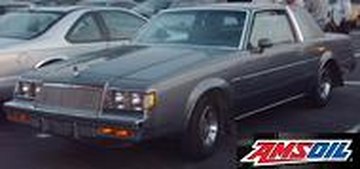
Catalog vehicle photograph for 1982 Buick REGAL
Vehicle photograph from our catalog. Appearance may differ by model or trim.
Visit us on social media